The AI Workload Paradox: Why Your New "Time-Saving" Scribe is Drowning You
The Scene I See Almost Every Day
Let me walk you through something I hear constantly from practitioners in my world.
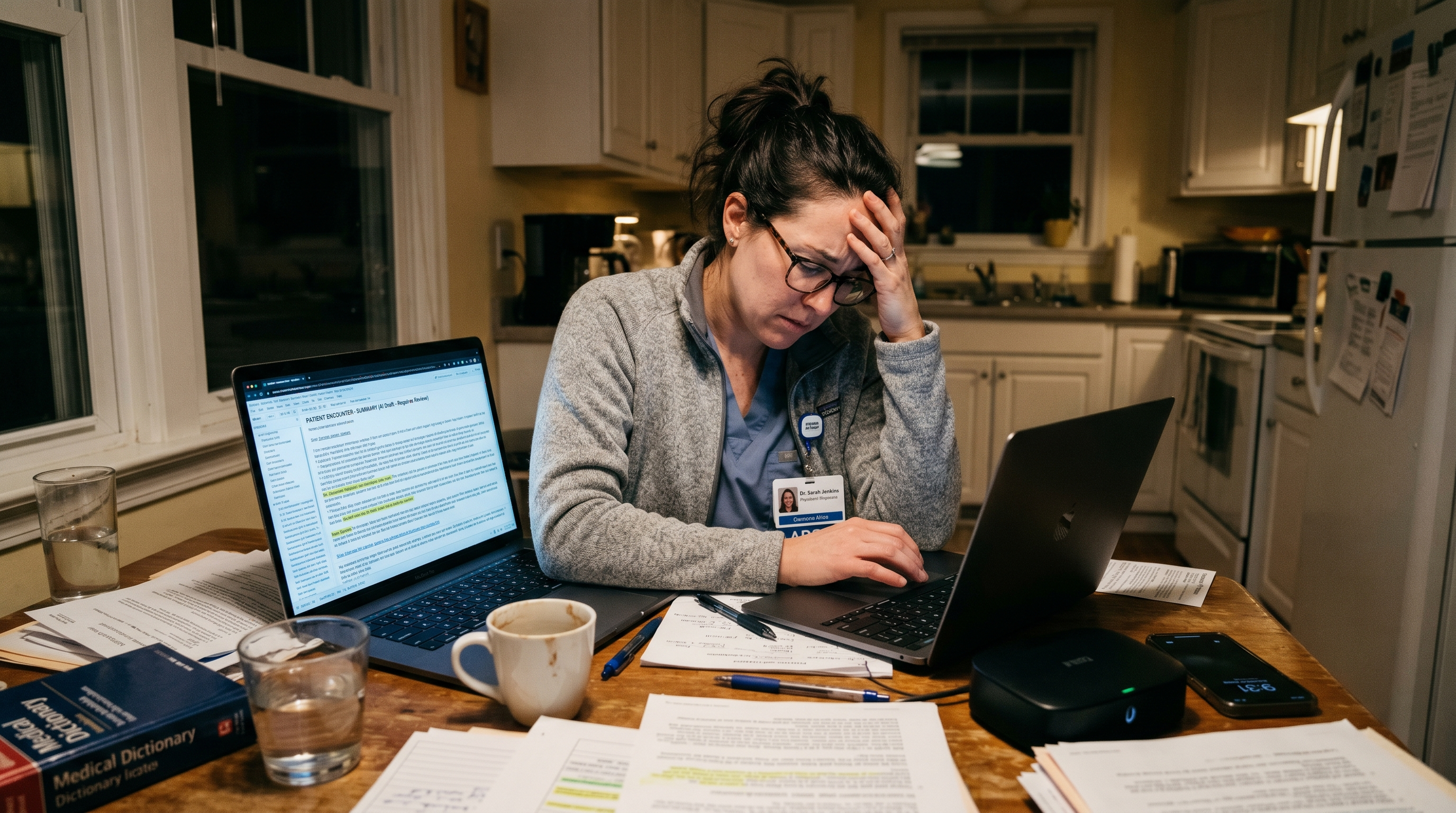
You are a brilliant, empathetic clinician. You provide incredible care from 9 AM to 5 PM. But by 9 PM, you are sitting at your kitchen table completely drowning in clinical documentation, trying to reconstruct what a patient said seven hours earlier.
So you do what any exhausted professional would do. You buy an ambient AI medical scribe. You think, "Finally. The AI will just listen to the visit and write my notes for me." But a few weeks later, you realize you are somehow working harder than before.
You are not imagining things.
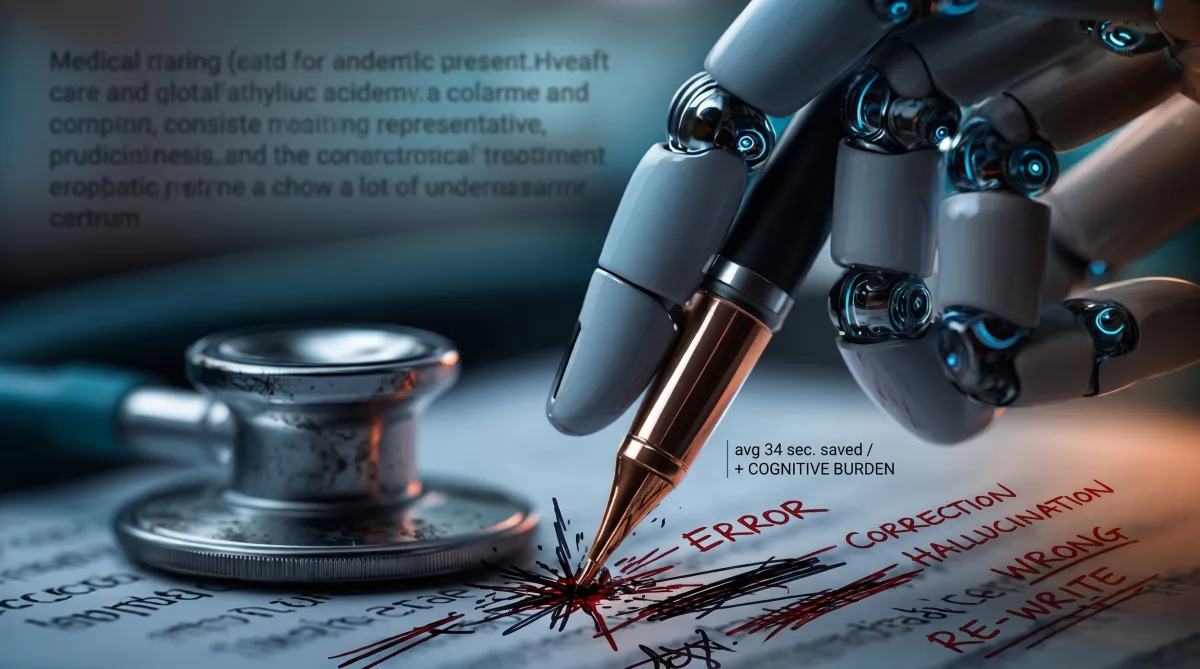
A recent study published in the National Library of Medicine evaluated the real-world impact of AI scribes and found a staggering reality — the AI scribe saved an average of only 34 seconds per note. And because the AI generated minor errors and hallucinations along the way, the cognitive burden of reviewing and correcting those notes actually created what researchers called a "workload paradox" — leaving physicians more fatigued than before the tool was ever introduced.
Why the Current Approach Is Broken
This doesn't make sense until you look at it through the lens of digital architecture. And here is what I want you to understand.
The problem is not that the AI is bad. The problem is that you are applying advanced AI to the exact same broken workflow you already had.
When you buy a generic ambient scribe, you are treating AI like a glorified dictation tool. You are taking a disorganized, 30-minute human conversation and asking the AI to guess what matters. The AI then produces a massive block of text, and now you are spending your most limited resource — mental energy — proofreading and correcting its assumptions.
You have not saved time. You have just traded the fatigue of writing for the fatigue of editing.
That is not a solution. That is a rebranded version of the same problem.
The Connector Strategy
To actually solve this, we have to stop trying to automate the note and start automating the ecosystem around the note. In the S.A.G.E. Framework — the Strategic Accelerator Growth Engine I use with my clients — we do not deploy isolated scribe tools. We use what I call the Connector Strategy.
Instead of asking one AI to carry an entire messy conversation and reconstruct it from memory, the Connector agent operates across your entire workflow in three phases:
Pre-Visit: The Connector pulls the patient's intake forms, assessment results, and CRM data before the visit even begins. The AI already knows who is walking in the door.
During the Visit: The ambient AI only listens to fill in the missing gaps — not to write the entire history from scratch. Because the context is already loaded, the AI is doing precision work, not guesswork.
Post-Visit: The Connector routes the structured data directly into your EHR and triggers the appropriate follow-up sequence automatically.
When you use the Connector Strategy, you are not asking AI to be a medical student taking wild guesses at a SOAP note. You are treating AI as an Orchestrator — connecting front-end patient data directly to back-end clinical documentation. You eliminate the cognitive load of editing entirely.
That is how you get your evenings back.
References & Further Reading
Beyond Human Ears: Navigating the Uncharted Risks of AI Scribes in Clinical Practice (2025), National Library of Medicine — PMC12460601. Source for the AI workload paradox analysis and the 34-second time savings finding.
The S.A.G.E. Framework: Implementing Connector Agents for Full-Ecosystem Workflow Automation. Ceyise Studios / Neuroaesthetic Agentics — proprietary framework.